
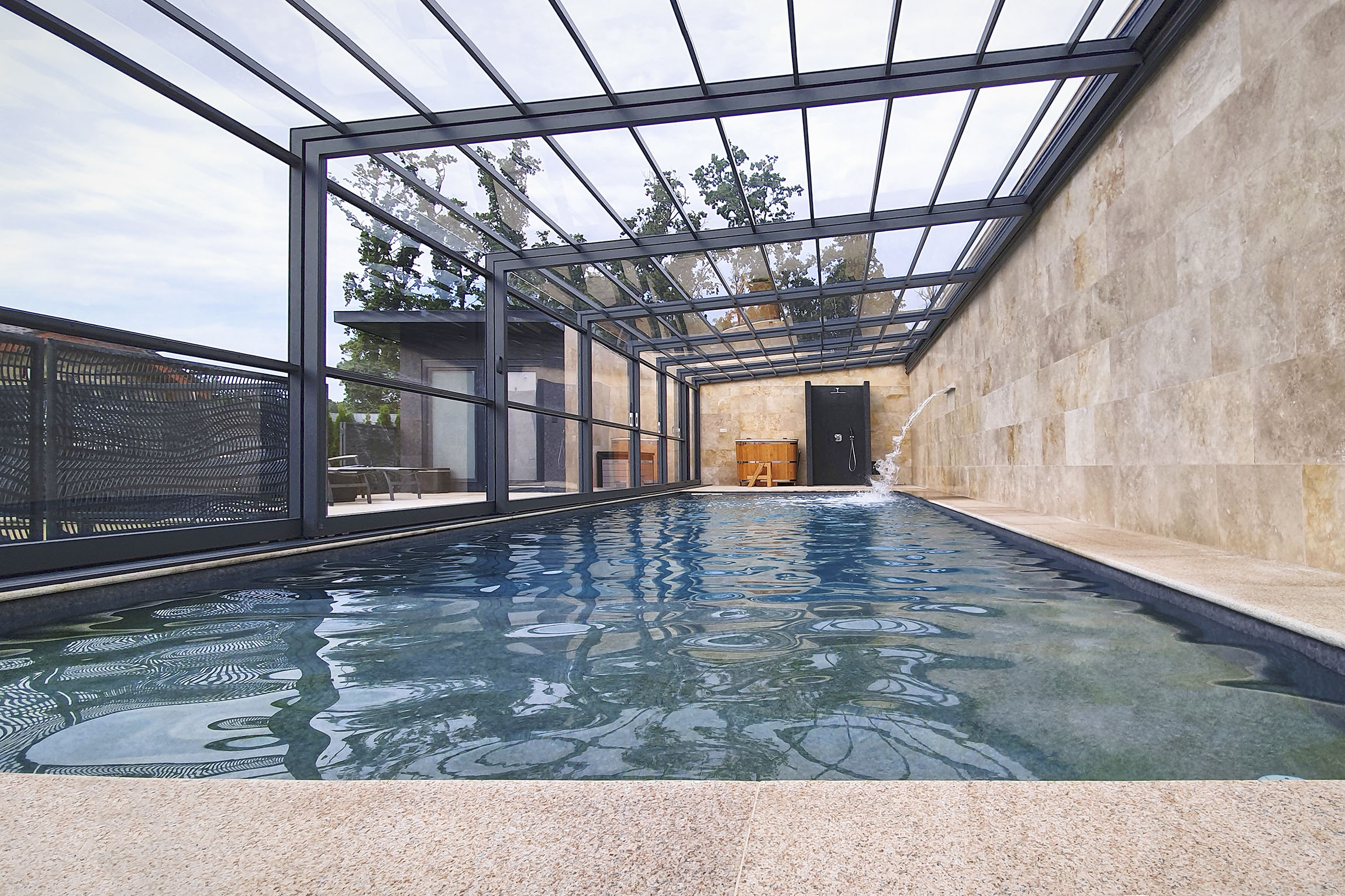
Guide to Cleaning and Pool Chemistry: What Helps Your Wellness Space and What Quietly Damages It
POPP International2 min read
Regular, gentle care ensures that your enclosure continues to look and work as it did on the day it was installed. These are the key rules for safe cleaning and the correct pool chemistry, which has a crucial influence on the lifespan of the materials.
Gentle cleaning of the structure and panels
- Keep tracks clear: Keep guide tracks completely free of sand and fallen debris so the segments continue to move smoothly.
- Water is suitable, but use it carefully: You may gently wash the structure and panels from both sides with pressurised water. Warning: Keep the water jet strictly away from solar panels and all electrical components.
- Use only soap and soft materials: Use only a weak soap solution applied with a soft sponge or microfibre cloth on aluminium profiles. All other solutions are prohibited. Polycarbonate panels should be cleaned only with a stream of clean water.
- Absolutely avoid: Do not use abrasive products that could permanently scratch the surface. Products containing benzene, petrol, acetone or other organic solvents are also prohibited.
Caring for mechanical details
- Regular lubrication: Twice a year, treat door hinges, closing mechanisms and locks with a suitable silicone oil that is not applied as a spray. Make sure the oil does not come into direct contact with the panels.
- Metal components: Stainless-steel polishing paste is effective against possible oxidation on parts without a surface finish. Again, carefully protect the surrounding polycarbonate from contamination.
Chemistry that will not damage the structure
Incorrectly balanced water aggressively attacks the enclosure's surface finish. Maintain the following values for long-term colour and material stability:
- Ideal pH: between 7.2 and 7.6. Values outside this range can permanently damage the entire aluminium structure. Remember to use a test kit to monitor total alkalinity as well, since it directly affects pH stability.
- Free chlorine: Normally maintain a level of 0.3–0.8 mg/l. If the water is warmer than 30 °C, the safe range moves to 0.8–1.5 mg/l, in accordance with EN 16713-3.
Correctly balanced pool chemistry and gentle maintenance significantly extend the life of your enclosure. You can find further regular steps in our guide to year-round pool enclosure maintenance. If you are unsure about the correct procedure, contact us.
Want to know which enclosure suits you best?
Get in touch and we'll prepare a no-obligation, tailor-made quote.
Contact us