
Covered Terrace or Conservatory? What's the Actual Difference
A covered terrace protects you from rain and wind for three seasons; a conservatory is a full-fledged, heated room for the whole year. We explain the difference in construction, comfort, building demands and cost – so you can choose exactly what you expect from your new space.
Do you want to spend more time outdoors but aren't sure which solution is right for your home? We'll explain simply the difference between an airy terrace and an insulated conservatory, so you can choose exactly what you expect from your new space.
Extending your living space towards nature is the dream of many house owners. The terms covered terrace and conservatory are often used interchangeably, however, even though structurally and functionally they are two completely different concepts with different demands on budget and building readiness.
1. Covered Terrace: An Airy Space for Three Seasons
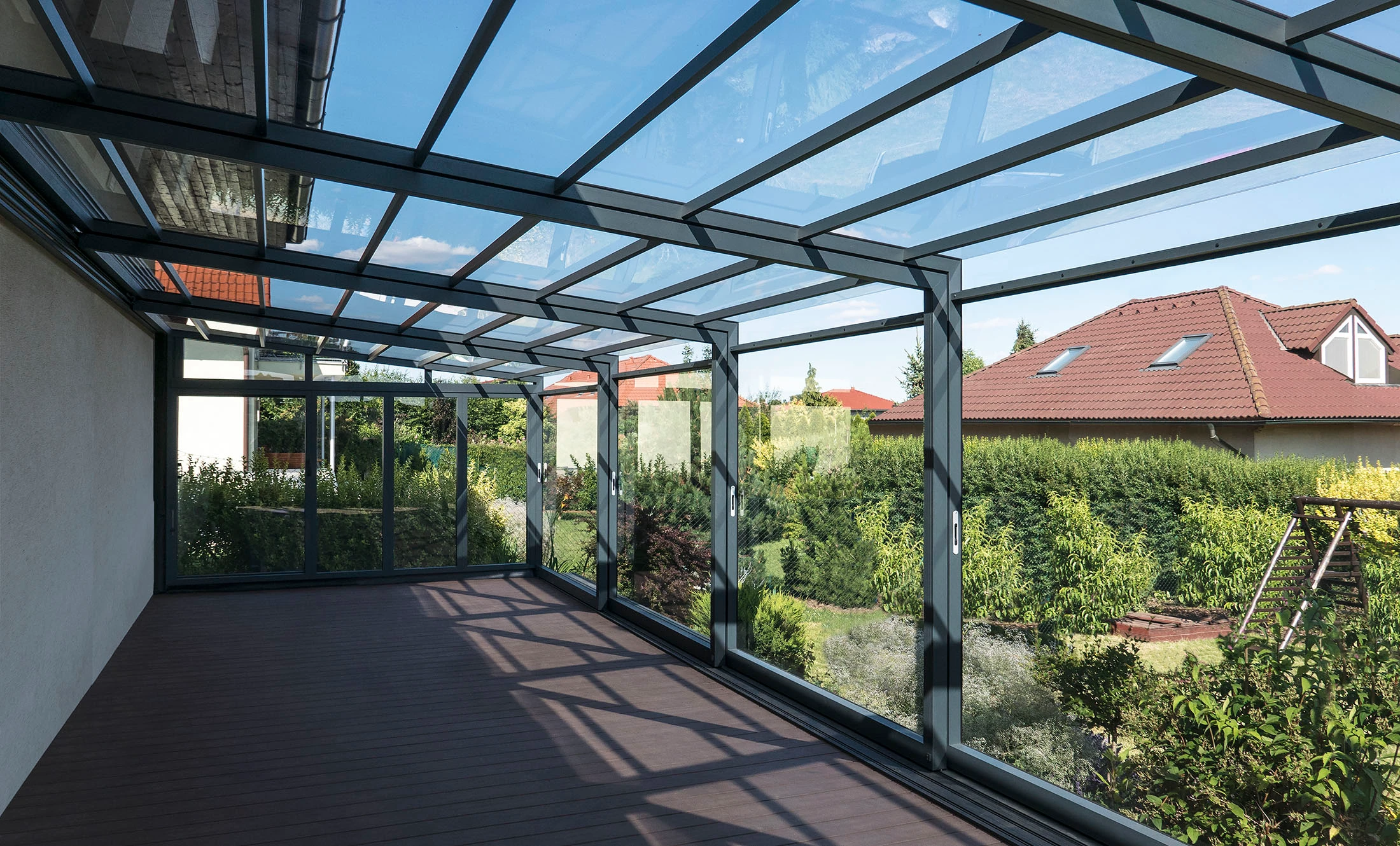
Roofing a terrace with glass or polycarbonate systems primarily serves to protect against bad weather during spring, summer and autumn. It is not an insulated space. Its main goal is to create a sheltered zone where you won't be caught out by a summer rain shower, autumn wind or harsh sun. Thanks to the solar effect, the structure can capture heat and thus prolong your time outside, but in winter it will be cold here.
A huge advantage of modern aluminium enclosures is the large-format sliding panels. They allow you to adapt the space completely to the current weather. On hot days you simply slide them aside and seamlessly connect the terrace with the garden, ensuring natural ventilation. On cooler evenings, on the other hand, you draw them closed and create a pleasant sheltered spot for a family dinner. It is an ideal and cost-effective choice for those who want to spend more time in the fresh air and protect expensive garden furniture all year round.
2. Conservatory: A Full-Fledged Room All Year Round
From a technical point of view, a conservatory is another, fully insulated room of your house. Its construction requires massive profiles with a thermal break and the use of heavy insulating double or triple glazing. This space is usually firmly connected to the house's heating system, which means you maintain a standard room temperature in it even when there is deep frost and snow outside.
Owners most often use this space as a bright year-round dining room, home office or living area with a view of the snowy landscape. A conservatory does, however, call for precise planning. Besides heating, you also have to address quality shading technology so that it doesn't turn into a greenhouse in summer, and an effective forced-ventilation system against condensation on the windows. In short, it serves to permanently extend the living area, not as an occasional outdoor shelter.
3. Building Complexity: A Crucial Factor in the Decision
The difference between the two variants is most pronounced in the demands of the actual construction. A conservatory is a full-fledged building. It requires deep, insulated foundations, often a building permit as well (because it permanently affects the building's thermal envelope) and a complex connection to utility networks. Its construction represents a significant building intervention in the running of the household and also brings considerably higher financial costs.
On the other hand, an uninsulated sliding terrace enclosure is an incomparably simpler and faster option to build. It requires neither a heating connection nor complex insulation of the base slab. A great benefit is the trouble-free installation on a finished plot. An experienced assembly team can put together the lightweight aluminium structure within just a few days. You don't need heavy machinery that would destroy your already established lawn or terrace boards, and the whole process is clean and without unnecessary disruption to your living.
Conclusion: Choose the Space According to Your Real Needs
Before you make the final decision, critically assess exactly how you want to use the new space. If you are looking for a flexible retreat for summer barbecues, spring coffee or autumn get-togethers outside with a clear passage to the garden, a glazed covered terrace is a smart and perfectly sufficient choice. But if you are physically missing one room in the house and long for an insulated space usable even in January, a conservatory will be a necessity for you.
Whether you ultimately decide on a light and flexible terrace or a massive insulated extension, a quality structure is always a sensible investment in the future. Not only will it bring you immediate user comfort, but it will also permanently increase the aesthetic and market value of your property.
Want to know which enclosure suits you best?
Get in touch and we'll prepare a no-obligation, tailor-made quote.
Contact us